Natural Home
Why Beeswax Candles Are Worth the Investment
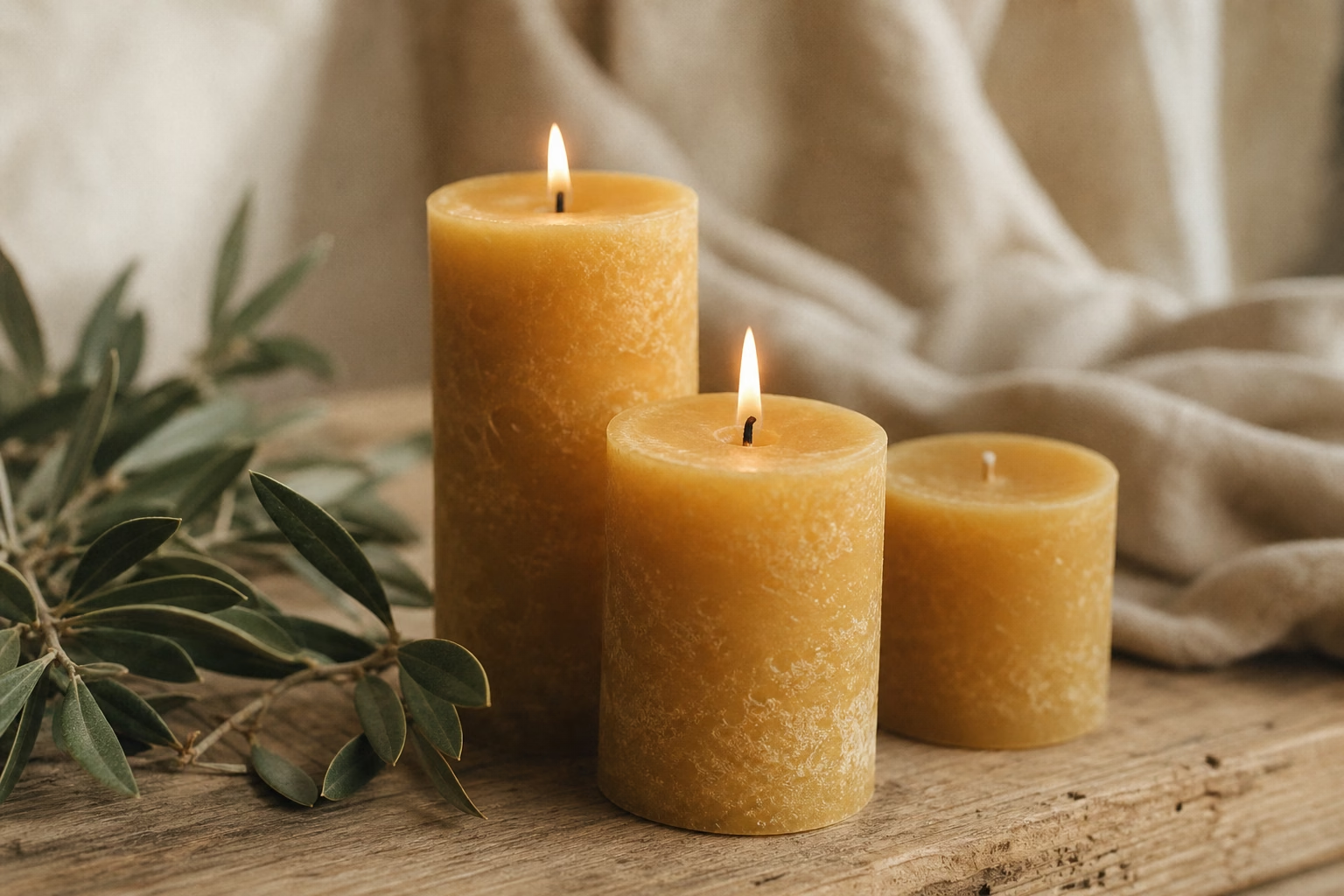
Most candles on the market are made from paraffin wax - a petroleum byproduct that releases trace amounts of toluene and benzene when burned. The scent is often synthetic, the burn uneven, and the soot visible on walls and ceilings over time. Beeswax is different. It is the only fuel that emits negative ions when burned, which attach to airborne particles and help clear the air rather than polluting it.
None of this makes beeswax cheap. A quality pillar candle can cost four to five times more than a comparable paraffin version. Whether that cost is justified depends on what you are actually looking for. This guide covers what the difference means in practice, how to identify genuine beeswax, and how to get the most from every burn.
What Makes Beeswax Different
Beeswax has the highest melting point of any naturally occurring wax - around 62 to 64 degrees Celsius. This means it burns slowly and produces very little drip. A well-made beeswax pillar left on a heat-resistant surface will form a deep wax pool that essentially feeds itself, resulting in burn times two to five times longer than paraffin candles of the same size.
The flame itself burns brighter and at a spectrum closer to natural sunlight, which is part of why beeswax has been used in places of worship for centuries. The light is warm without being yellow, and the natural honey scent - present even in unscented candles - comes from the residual pollen and propolis in the wax.
Soy wax is often positioned as the sustainable alternative to paraffin, but its burn properties sit between paraffin and beeswax. Soy burns cooler, which means a softer wax pool and faster overall consumption. It also requires more fragrance oil to hold scent, which can introduce synthetic compounds. Beeswax holds and releases fragrance naturally without additives.
The Hidden Costs of Paraffin
The price difference between paraffin and beeswax looks significant at the point of purchase. Calculate per hour of burn time, and the gap narrows considerably. A 200g beeswax pillar candle that burns for 40 hours works out to less per hour than a 200g paraffin candle that burns out in 25. Factor in that you are not replacing the candle as frequently, and the annual cost of keeping your home lit with beeswax can be comparable to a mid-range paraffin habit.
The less visible cost of paraffin is its indoor air quality impact. Most people burn candles in enclosed spaces - bathrooms, bedrooms, living rooms with closed windows. Over time, paraffin soot accumulates on surfaces and in the air you breathe. For anyone with respiratory sensitivities, switching to beeswax or pure soy is one of the more practical changes available.
How to Read a Beeswax Candle Label
There is no universal standard requiring candle makers to disclose their exact wax composition. A candle labeled "contains beeswax" might be 10% beeswax and 90% paraffin. The only guarantee of a pure product is a label that reads "100% pure beeswax" - anything else is worth questioning.
Raw, unbleached beeswax has a natural golden to amber color. White beeswax has been bleached, either chemically or through exposure. Neither is necessarily problematic, but bleached wax has been processed, which reduces the natural honey fragrance. If you are buying beeswax specifically for its scent, look for unbleached.
Bloom - a white, dusty-looking coating that sometimes develops on beeswax candles - is not a sign of poor quality. It is a natural process caused by the wax crystals rising to the surface in temperature changes. It can be gently buffed away with a soft cloth, or simply left alone. It does not affect burn quality.
The best candle is one that serves the room without drawing attention to itself - steady light, clean air, and a flame that does not demand management.
Getting the Best Burn
The first burn of any candle determines the memory of the wax. Allow a pillar candle to burn long enough that the melt pool reaches within about a centimeter of the edge before extinguishing. For a large pillar, this might take two to three hours. Cutting a burn short on the first use creates a tunnel that deepens with each subsequent burn, wasting the outer wax entirely.
Keep the wick trimmed to around 6 to 7 millimeters before each use. A wick that is too long burns hotter than it needs to, consumes wax faster, and produces more smoke. Most beeswax candles come with cotton wicks that curl slightly when burned - this self-trimming mechanism is intentional and designed for cleaner combustion.
Draughts are the enemy of even burning. A candle flame in moving air will flicker, burn unevenly, and may gutter or self-extinguish. If your candle seems to be burning faster on one side, check for air movement in the room before blaming the candle.
Caring for Your Candles
Store beeswax candles away from direct sunlight and heat. Prolonged UV exposure fades the natural golden color and can cause surface cracking in pillar candles. A cool, dark drawer or cupboard is ideal. Beeswax does not go off in the way that scented paraffin candles can - the fragrance compounds in synthetic candles degrade over time, while natural beeswax is chemically stable and will keep indefinitely.
For tapered candles stored upright in a holder, make sure the holder fits snugly. A loose taper will lean as the wax softens, causing uneven burning and potential drips. The same applies to storage - tapers stored lying down in warm conditions can develop a curve that makes them impractical to burn.
Finally, invest in a candle snuffer rather than blowing candles out. Blowing out a beeswax candle sends the wick smoking and pushes the melted pool, creating drips. A snuffer deprives the flame of oxygen cleanly and leaves the wick in the right position for the next use.
The switch to beeswax is not necessary for everyone. But if you burn candles regularly and care about the quality of your indoor air, it is one of the easier upgrades to make - and one that pays for itself in both burn time and cleaner air over any reasonable period. Beeswax candles pair particularly well with a warm mineral bath as part of a pre-sleep wind-down - the steady light and faint honey scent complement the ritual without competing with it.