Natural Home
Getting Started with Essential Oils at Home
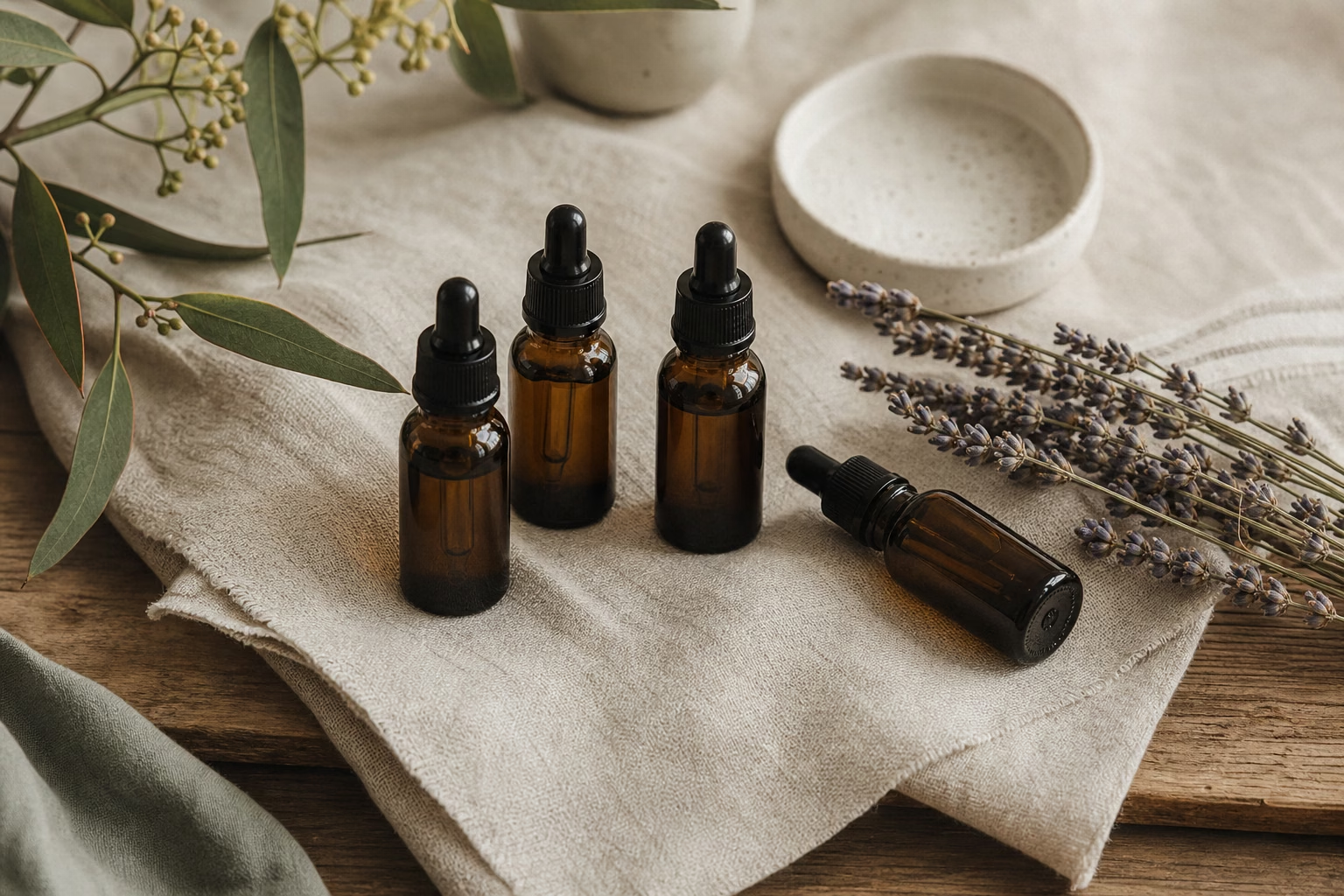
A single diffuser running for an hour can shift the atmosphere of a room more decisively than any scented candle. The difference is control: with essential oils, you choose exactly what you smell, how strong, and for how long. That precision is what makes them practical beyond their reputation as a wellness product. A drop of eucalyptus in a sick room, lavender before bed, bergamot at the desk - these are functional tools, not just fragrances.
The challenge for beginners is that the market is enormous and poorly regulated. Most of what is labeled "aromatherapy" is synthetic fragrance oil, which behaves differently and carries none of the same properties. This guide focuses on building a useful starting collection, understanding how to use it, and avoiding the common mistakes that put people off in the first few months.
Choosing Your First Oils
Start with four oils and get to know each one properly before expanding. A practical foundation for home use: lavender, eucalyptus, sweet orange, and peppermint. These four cover most of what you will want in a home environment and blend well together and separately.
Lavender is the most versatile oil available. It works in every room, complements almost every other oil, and has the broadest range of applications from sleep support to topical wound care. If you only ever buy one oil, this is it. Eucalyptus is the clear-air oil - useful during cold and flu season, energizing in bathrooms and laundry rooms. Sweet orange is uplifting and approachable, the oil most likely to be enjoyed by everyone in a household. Peppermint focuses attention and is particularly effective as a desk companion.
Quality matters more with essential oils than with almost any other product in this space. The difference between a genuine steam-distilled lavender and a synthetic lavender fragrance is not subtle. Look for a supplier who provides the botanical name (Lavandula angustifolia for true lavender, not lavandin), country of origin, and batch testing results. The price per milliliter for genuine oil is notably higher than for fragrance blends.
Diffusers vs Room Sprays
Ultrasonic diffusers are the standard recommendation, and for good reason. They disperse a cool mist that carries oil molecules into the air without heat, which preserves the chemical integrity of the oil. A diffuser in a medium-sized room running on a 30-minute timer will fragrance the space effectively without overwhelming it. Most modern diffusers have timer functions - use them. Continuous diffusion desensitizes your nose within 20 minutes.
Room sprays are faster and more direct. Mix 15 to 20 drops of essential oil per 100ml of water in a small glass spray bottle. Shake before each use - oil and water do not mix without an emulsifier, but for a room spray this does not matter as you are dispersing both the water mist and the oil droplets into the air. Spray toward the ceiling rather than at furniture or textiles to avoid staining.
Reed diffusers and oil burners that use heat are less effective for aromatherapy purposes. Heat alters the chemical structure of volatile compounds, which reduces or eliminates their functional properties. For pure fragrance, they are fine. For anything more specific, use cold diffusion.
Blending Basics
Fragrance blending follows a top-middle-base structure. Top notes are the first impression - light, sharp, and fast to evaporate. Middle notes form the body of the blend. Base notes are heavy and slow to evaporate, anchoring the whole composition. For home use, you do not need to think in these terms rigidly, but the principle is useful: a blend with only top notes will smell sharp and dissipate quickly; a blend with only base notes will be heavy and persistent.
A simple, reliable ratio for beginners: 2 parts top note, 2 parts middle note, 1 part base. Using the starter collection above, peppermint (top) with lavender (middle) and a drop of cedarwood or vetiver if you have it (base) produces a focused, calm blend suited to a home office. Sweet orange with lavender and frankincense is a classic evening combination.
The goal is not to fill the room with fragrance - it is to create a background that serves the activity happening in that room.
Safety Guidelines
Essential oils are concentrated plant extracts and should be treated as such. The National Association for Holistic Aromatherapy publishes detailed safety guidelines used by professional practitioners - a useful reference before blending for topical use. A few principles that matter in a home context:
- Never apply undiluted essential oil directly to skin without research - most oils require dilution in a carrier oil at 1 to 3% concentration. Use a dilution calculator to get the exact drop count for your bottle size.
- Citrus oils (including sweet orange) are phototoxic when applied to skin before sun exposure. This is not an issue for room diffusion but matters for any topical use.
- Eucalyptus and peppermint should not be diffused around children under two, and should be used cautiously around young children generally.
- If you have pets, particularly cats, research any oil before diffusing. Cats metabolize certain compounds differently from humans, and several common oils are inappropriate in homes with cats. Lavender in low concentration is generally considered safe for diffusion around cats, but always verify.
- Diffuse in ventilated spaces. Circulating fresh air prevents buildup of volatile organic compounds.
Building a Seasonal Rotation
One of the practical advantages of essential oils is how naturally they map onto seasons. This is not arbitrary - many aromatic plants are tied to specific parts of the year, and using them seasonally connects your home's atmosphere to what is happening outside.
Spring and early summer favor lighter, floral and citrus notes: neroli, rose geranium, sweet orange, lemon. The Nordic landscape in April and May has a particular sharpness to it - birch and pine notes (try Atlas cedarwood or Scots pine oil) capture this well. Late summer moves toward herbs: basil, thyme, clary sage. Autumn is the territory of heavier resins and spices: frankincense, cedarwood, clove, cinnamon - all used lightly. Winter brings familiar warmth: pine, orange, cardamom, sandalwood.
A seasonal rotation also prevents nose fatigue. If you use the same oils year-round, your brain adapts and stops registering the scent as distinctive. Rotating by season keeps each collection fresh when it returns.
The investment in four good-quality oils is modest, and the shelf life of most essential oils in dark glass bottles away from heat is three to five years. For a starting point that provides genuine usefulness rather than just novelty, four oils and a basic diffuser is everything you need.