Natural Home
Natural Tick Prevention That Actually Works
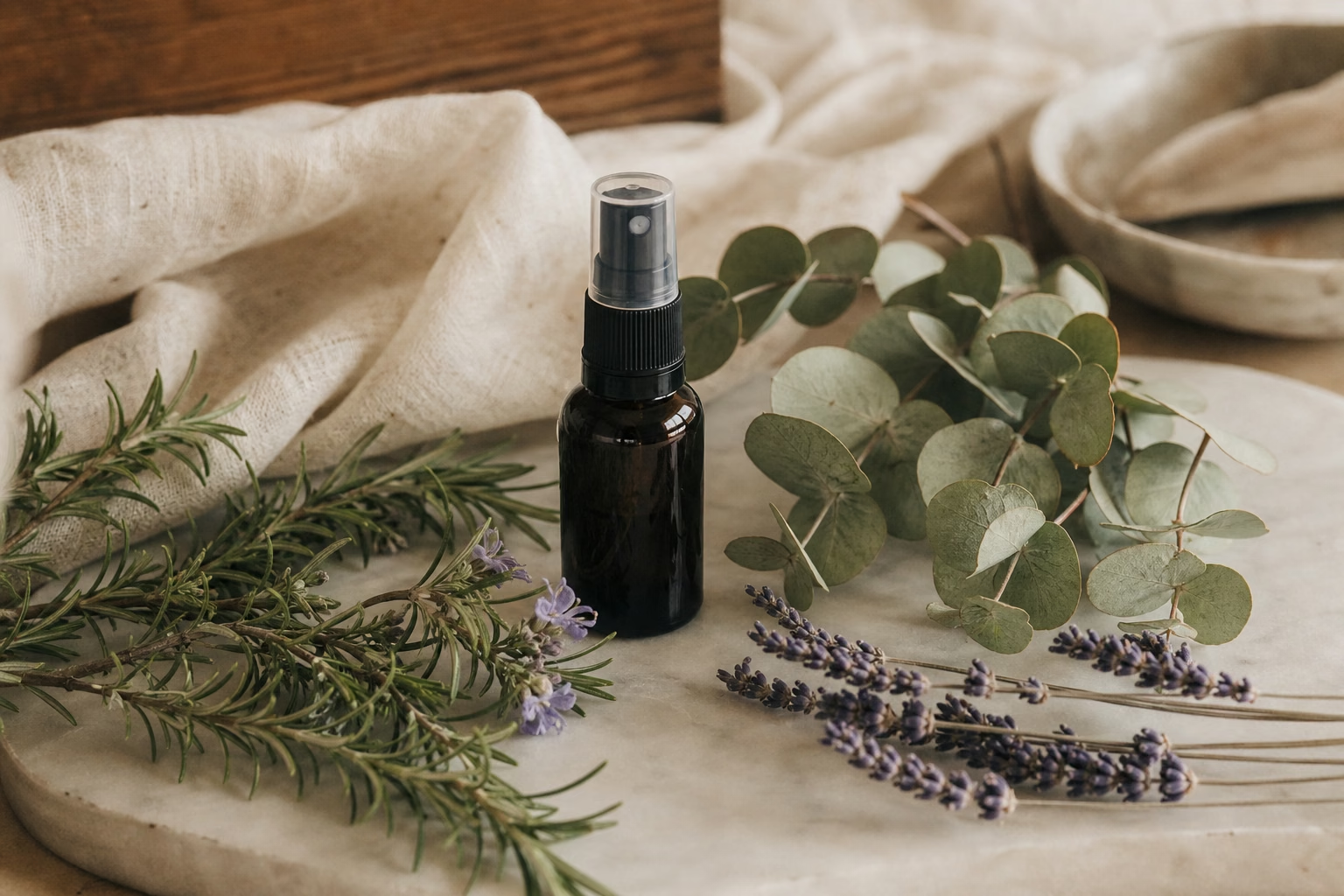
In Sweden, tick season runs roughly from March through November, with the peak period in late spring and early autumn when temperatures hover between 7 and 20 degrees Celsius. Ixodes ricinus, the common castor bean tick, is the primary carrier of Lyme disease in Scandinavia, and its range has expanded significantly northward over the past two decades. Avoiding ticks is not possible for anyone who spends time outdoors. Reducing exposure and acting quickly after outdoor time is what matters.
DEET remains the most studied and reliably effective chemical repellent for ticks, but many people - particularly those with children or who use repellents frequently - prefer to minimize its use. This is a reasonable position. The natural alternatives discussed here do not replace DEET in high-risk scenarios, but in combination with behavioral measures they offer genuine protection that is proportionate for most everyday outdoor activity in Sweden.
Why Reduce DEET-Based Products
DEET is effective and has been in use since the 1940s with a reasonable safety record. The concerns are more about frequency and concentration than any acute toxicity. Applying a high-concentration DEET product daily to skin throughout a five-month outdoor season is a different calculation from occasional use before entering known tick habitat. For children, the European Chemicals Agency recommends products at 15 to 20% concentration, not the stronger formulations sometimes sold in outdoor stores.
For many people, the practical issue is simply that they dislike the feel of DEET on skin - it is oily, smells strongly chemical, and can damage synthetic fabrics. Natural alternatives applied in the same systematic way provide a reasonable level of protection for lower-risk situations such as garden work, short forest walks, and everyday outdoor movement.
Essential Oils That Repel Ticks
Several essential oils have demonstrated repellent activity against Ixodes ticks in laboratory and field studies. The most reliable are rose geranium (Pelargonium graveolens), neem, and lemon eucalyptus. Lemon eucalyptus is a particular case - the CDC lists OLE (oil of lemon eucalyptus) as an effective repellent alongside DEET, though it must be distinguished from pure lemon eucalyptus essential oil, which is different in composition and less studied.
Rose geranium is worth attention for a Swedish context. It has good evidence as a tick repellent, smells pleasant, and tolerates dilution well. A 2% dilution in a carrier oil - roughly 12 drops per 30ml of fractionated coconut oil or similar - applied to exposed skin provides around two hours of active repellency. This is shorter than DEET, which means reapplication matters.
Apply to the lower legs, ankles, the back of the knees, and the waistband area - these are the primary access points for ticks moving upward from vegetation. The neck and hairline matter for longer outdoor periods. Avoid applying oils directly near eyes or mucous membranes, and do not use essential oils on children under two.
No repellent, natural or chemical, eliminates the need for a tick check after outdoor time. A thorough body check within two hours of returning indoors is the single most effective intervention available.
Yard and Garden Prevention
Ticks do not jump or fly. They wait on vegetation at heights typically between 15 and 80 centimeters and grab passing hosts. This means the transition zones between your lawn and any taller vegetation - hedgerows, woodland borders, long grass - are where exposure is highest. A simple maintained border between these zones dramatically reduces the tick population in the actively used parts of your garden.
Keep grass mown short in areas where children play. Ticks die in dry, sunny conditions and avoid open lawn. Leaf litter and dense ground cover retain moisture and are preferred habitat. Clear fallen leaves promptly in autumn and maintain dry, open conditions around seating and play areas.
Cedar mulch is worth using around garden borders. Cedarwood essential oil is well-documented as a tick repellent, and the residual oils in cedar mulch provide a passive barrier effect. This is not a substitute for mowing and habitat management, but it adds a layer to a combined approach. Replace mulch annually to maintain the active compound content.
Protective Clothing and Checking
Light-colored clothing makes ticks easier to spot. Long trousers tucked into socks is standard advice that feels excessive for a garden stroll but makes a real difference in known tick habitat - woodland paths, long grass, shrubby vegetation. Friluftsfrämjandet (the Swedish Outdoor Association) updates its tick awareness guidance each spring and is worth checking before the first long hike of the season. The goal is to prevent ticks reaching skin long enough for you to spot and remove them during a check.
Permethrin-treated clothing is available and provides effective long-lasting repellency through physical contact - ticks are killed or knocked down on contact rather than repelled by scent. This is a chemical intervention but not a DEET-based one, and the exposure route is through clothing fabric rather than direct skin contact. For anyone spending extended periods in high-risk environments, permethrin-treated socks and trouser legs are worth considering.
What to Do If You Find a Tick
Remove with fine-tipped tweezers or a dedicated tick removal tool. Grip as close to the skin surface as possible and pull upward with steady, even pressure. Do not twist or jerk. Do not apply heat, petroleum jelly, or other substances to the tick before removal - these methods are ineffective and can cause the tick to regurgitate, which increases transmission risk.
After removal, clean the bite area with alcohol or soap and water. The risk of Lyme disease transmission increases with attachment duration - a tick that has been attached for less than 24 hours has very low transmission probability. Monitor the bite area for three to 30 days. A slowly expanding red rash (erythema migrans) at the bite site is the primary early sign of Lyme disease and warrants a visit to a doctor for assessment and antibiotic treatment if indicated.
The Folkhalsomyndigheten (Swedish Public Health Agency) maintains current guidance on Lyme disease and TBE (tick-borne encephalitis), which is prevalent in parts of Sweden. TBE vaccination is recommended for anyone in endemic areas - this is separate from natural prevention measures and worth discussing with a healthcare provider if you spend time in the Swedish archipelago or certain inland forest areas.