Wellness
Natural Sea Sponges: Why They Outlast Synthetic Ones
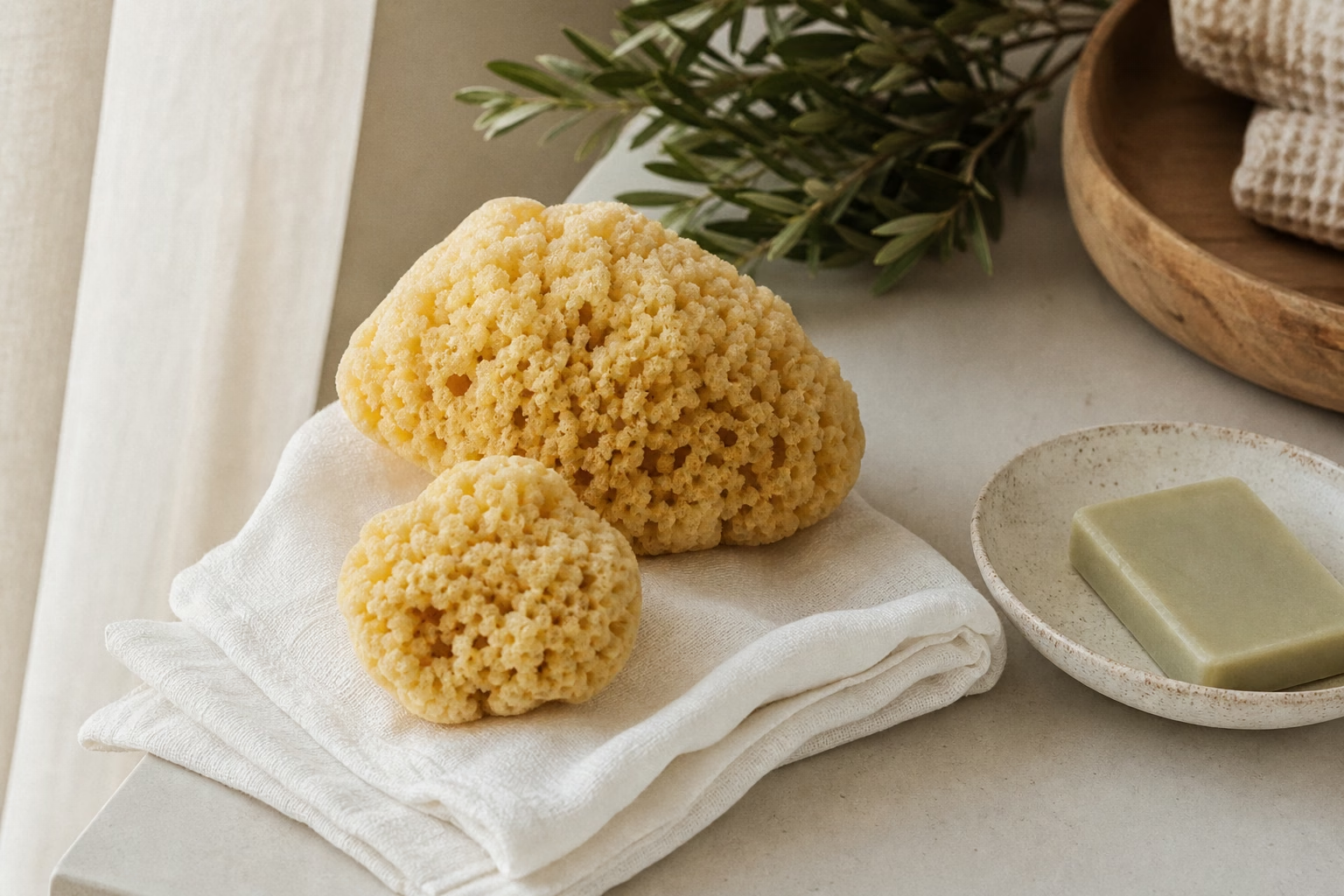
Spongia officinalis - the bath sponge - is a marine animal that has been used for bathing since at least Ancient Greece. The Roman legions used natural sponges as canteens. Mediterranean fishermen dived for them commercially for over two thousand years. The synthetic alternatives that displaced them were only developed in the 1940s. In terms of historical testing, the natural sponge has a rather stronger track record than its polyurethane replacement.
The case for returning to natural sponges is not primarily nostalgic. It comes down to material properties that synthetic sponges simply do not replicate: self-cleaning enzymes, hypoallergenic protein structure, rapid drying, and a texture that is soft on skin while being effective enough to create a good lather with very little product. This guide covers what to look for, how different species compare, and how to care for one so it lasts.
What Makes a Sea Sponge Different
Natural sea sponges contain natural enzymes that inhibit the growth of mold, bacteria, and mildew. This is the most practically significant difference from synthetic alternatives. A plastic loofah or polyurethane bath sponge in a warm, wet environment is ideal habitat for bacterial growth. Most dermatologists recommend replacing them every two to four weeks for this reason. A properly cared for natural sponge resists this colonization actively and can last a year or more.
The cell structure of natural sponges is also distinctive. The interlocking channels that create the sponge's water retention system are irregular, which means the surface against skin is uneven at a micro level - gently exfoliating without abrasion. Synthetic sponges have uniform, repeating cell structures that either scratch or do nothing depending on the material.
Natural sponges are also hypoallergenic. The protein that forms the sponge skeleton (spongin) does not trigger immune responses in the way that synthetic materials can. For anyone with sensitive skin or eczema, this is a meaningful practical consideration.
Types and What They Are Good For
The main species used in bath products are Spongia officinalis (the silk sponge), Hippospongia communis (the horse sponge), and several Atlantic species marketed under various regional names.
Silk sponges are the softest and most fine-textured, harvested primarily from the Mediterranean. They are best for face washing and baby bathing where the gentlest possible texture is required. They produce an excellent lather but are the most delicate of the natural sponge types.
Horse sponges are firmer and more durable. They hold more water, produce more lather, and are better suited to full-body washing. The texture is soft enough for daily use but provides more tactile feedback than a silk sponge.
Atlantic sponges from the Caribbean and Gulf of Mexico are widely available and typically less expensive than Mediterranean varieties due to aquaculture availability. Their quality varies more than Mediterranean harvested sponges, but good-quality Atlantic sponges are perfectly functional for bath use.
There is a reason sponges have been used for exactly this purpose for thousands of years. Evolution produced something remarkably well-suited to it.
How to Care for a Natural Sponge
The main rules: rinse thoroughly after each use, wring gently rather than twisting, and allow to dry completely between uses. Hang it or place it in an open rack where air can circulate. The bacteria-resistant enzymes function best when the sponge can dry out fully. A sponge left sitting in standing water will eventually degrade like any organic material.
For periodic deep cleaning, soak in a solution of one tablespoon of baking soda per cup of warm water for 30 minutes, then rinse thoroughly. Alternatively, a dilute tea tree oil soak (5 drops per 500ml water) achieves the same. Do not use bleach - it damages the sponge protein structure and eliminates the natural enzymes that make the sponge self-cleaning.
If the sponge develops an odor despite proper drying, it has been colonized by bacteria or mold - usually because it was kept too wet. A baking soda soak followed by a full day of dry air can rescue it. If the odor persists, the sponge has reached end of life. Unlike synthetic sponges, natural sponges are fully biodegradable and can go straight into compost or garden soil.
Environmental Impact
Wild-harvested sea sponges are a renewable resource when harvested responsibly. Sponges are filter feeders that play a functional role in marine ecosystems. Commercial harvesting operations that cut sponges rather than pulling them from the substrate allow regeneration from the base - most Mediterranean sponge beds recover within three to five years.
Sponge aquaculture has grown significantly, particularly in the Caribbean. Farmed sponges are grown on ropes or frames in controlled marine environments, reducing pressure on wild populations and allowing for more consistent sizing and texture. Look for aquaculture certification or "sustainably farmed" labeling if this matters to you.
The comparison with synthetic sponges is straightforward: polyurethane is petroleum-derived, non-biodegradable, and sheds microplastics into water with each use. Natural sponges shed nothing harmful into water and return fully to nature at end of life.
What to Look For When Buying
A quality natural sponge should be free of chemical smell. Some sellers bleach sponges for appearance - a pale, very uniform color can indicate bleaching. Natural, unbleached sponges range from cream to medium brown depending on species and harvest location. They may have slight irregular shape, which is normal and desirable.
Squeeze the sponge before buying if possible. It should be soft and spring back quickly. A sponge that feels brittle or does not recover its shape has likely been over-dried or improperly processed. The channels through the sponge should be open and clear, not clogged with processing residue.
For online purchases, established natural product suppliers with clear species labeling and responsible sourcing claims are preferable to anonymous marketplace listings. The price range for a quality bath sponge is roughly 150 to 400 Swedish kronor depending on size and species - about the cost of two to three months of synthetic sponge replacements.