Wellness
Making the Switch to a Bamboo Toothbrush
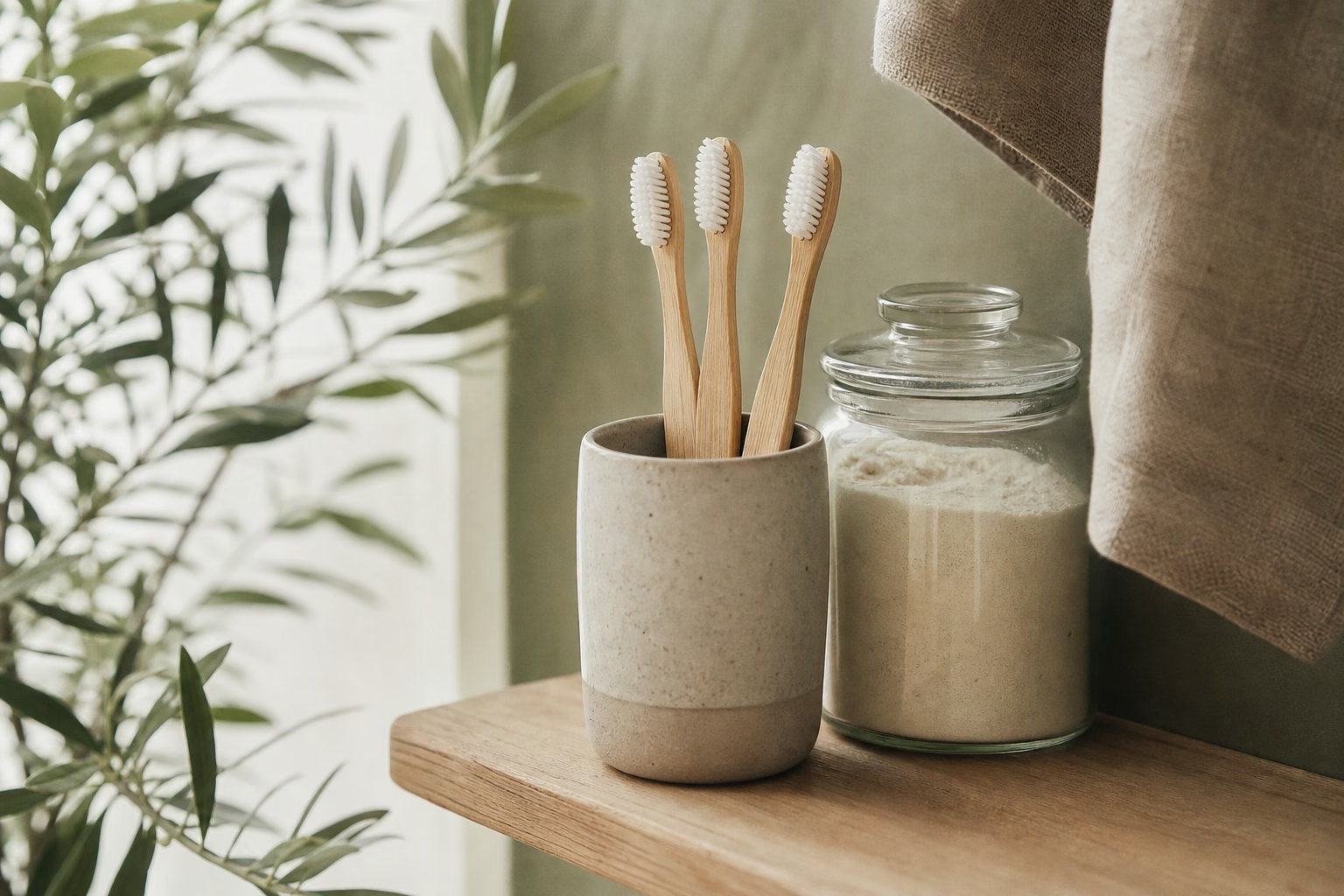
The average person uses around 300 toothbrushes in their lifetime. Dental associations worldwide recommend replacing a toothbrush every three months. At four brushes per year per person, that amounts to roughly 100 million plastic toothbrushes discarded annually in Sweden alone - and plastic toothbrushes, because they combine multiple types of plastic in the head and handle, cannot be recycled through any standard household stream.
Bamboo toothbrushes are one of the simplest and most direct substitutions in a lower-waste home. The handle is fully biodegradable. The cleaning performance is equivalent to a standard plastic brush. The transition is mostly a matter of managing one or two practical details that catch people out in the first few weeks.
Why Plastic Toothbrushes Are a Problem
Toothbrushes are a textbook example of a product designed for single-material manufacturing convenience rather than end-of-life practicality. The handle is typically polypropylene or polyethylene. The head contains nylon bristles embedded in a separate plastic head block. The rubber grip elements, present on most mid-range and premium brushes, are yet another polymer. These cannot be separated for recycling in any practical consumer scenario.
The result is that virtually all plastic toothbrushes end up in residual waste, incinerated or landfilled. Some brands offer mail-back recycling schemes, but uptake is low. The scale of the problem is significant: toothbrushes are among the top ten items found in ocean plastic surveys.
Bamboo resolves the handle problem comprehensively. Bamboo is among the fastest-growing plants on earth, reaching harvest maturity in three to five years without replanting. It requires no pesticides in standard cultivation and sequesters carbon effectively during growth. A bamboo handle composts in six months in active compost conditions.
What to Look for in a Bamboo Handle
Moso bamboo (Phyllostachys edulis) is the species used in most quality bamboo toothbrushes. It is dense enough to survive bathroom humidity without warping for the three months of expected use. Check that the bamboo handle is untreated or finished with a food-safe coating only - some cheaper handles are lacquered with compounds that compromise biodegradability.
The handle grip matters more with bamboo than plastic because the natural material is less forgiving of poor ergonomics. A well-designed bamboo brush has a subtly tapered handle and a head that mirrors standard dental-recommended proportions. Avoid handles that are too thick or too straight - they require more grip pressure, which is associated with overbrushing.
Look for carbonization markings or engravings rather than painted labels. Paint adds an additional material that may slow composting, and most applied surface treatments wear off within a few weeks in a wet bathroom environment anyway.
The Bristle Question
This is where most people discover that "100% biodegradable toothbrush" is not quite achievable with current materials. The bristles of virtually all commercial toothbrushes - bamboo and plastic handles alike - are nylon. Nylon bristles are the dental standard and currently cannot be replaced with a comparable natural material that meets hygiene and durability requirements.
Some brands use plant-based nylon or castor-oil-derived bristles marketed as biodegradable. These are an improvement over petroleum-derived nylon but typically have degradation times of years in industrial composting and are not suitable for home compost. Others use boar hair bristles, which are natural and compostable but carry concerns about animal welfare and hygiene that many people prefer to avoid.
The practical resolution: when composting your bamboo handle, remove the bristles first. Most bamboo brush brands provide heads with a small notch or easily pried-off bristle pad for exactly this purpose. Pull the bristles with pliers, discard them with plastic waste, and compost the handle. This takes about 30 seconds and makes the material separation complete.
The bamboo toothbrush does not solve the bristle problem - it solves the much larger handle problem. That is still worth doing.
Getting Used to the Feel
The most common feedback from people switching to bamboo is that the handle feels slightly different in the hand - lighter and with more texture than the smooth plastic they are used to. This typically resolves within a week as the grip adapts. The head and bristle experience is identical to a plastic brush once you are brushing.
Some people notice that bamboo handles absorb a small amount of water at the base near the head over repeated use. This is normal for an organic material in a wet environment and does not affect hygiene or performance. Store the brush upright in a holder that allows the base to air-dry between uses. Lying a bamboo brush flat in a puddle of toothpaste and water will eventually cause the handle to crack - the same basic care you would give any wooden item.
Children's bamboo brushes are widely available and follow the same principles. Smaller heads and softer bristles are available in bamboo as in plastic. The switch for children is if anything easier than for adults, as they do not have the ingrained pattern of the previous handle to unlearn.
Composting and End of Life
Remove the bristles as described above. The bamboo handle can go into a home compost bin, a garden compost heap, or be buried directly in soil. The Plastic Free July resource hub covers disposal for a wide range of common household swaps, including oral care products, and is useful if you are working through multiple changes at once. In active hot composting it will break down in four to six months. In a cold garden compost or direct soil burial, expect six to eighteen months depending on soil conditions and moisture.
If you do not compost at home, bamboo handles can go into green/food waste collections in most Swedish municipalities. Check with your local waste service (kommun) for their specific guidelines - composting infrastructure varies between regions.
The cost comparison with standard plastic brushes is roughly equivalent or slightly higher, depending on the brand. Mid-range bamboo brushes sold in four-packs cost about the same as comparable quality plastic alternatives. At scale - a family of four replacing four times annually - the difference is negligible, and the waste difference over a year is 16 plastic toothbrushes removed from the residual stream.